Problems for the SYNT 2025
These are the problems posed for the SYNT 2025:
The Swiss Young Naturalists' Tournament (SYNT) is a Swiss competition held in English, where science enthusiasts aged 12 to 16 from anywhere in Switzerland can participate. In preparation, they carry out their own research project, whose results are presented and defended at the actual tournament.
These are the problems posed for the SYNT 2025:
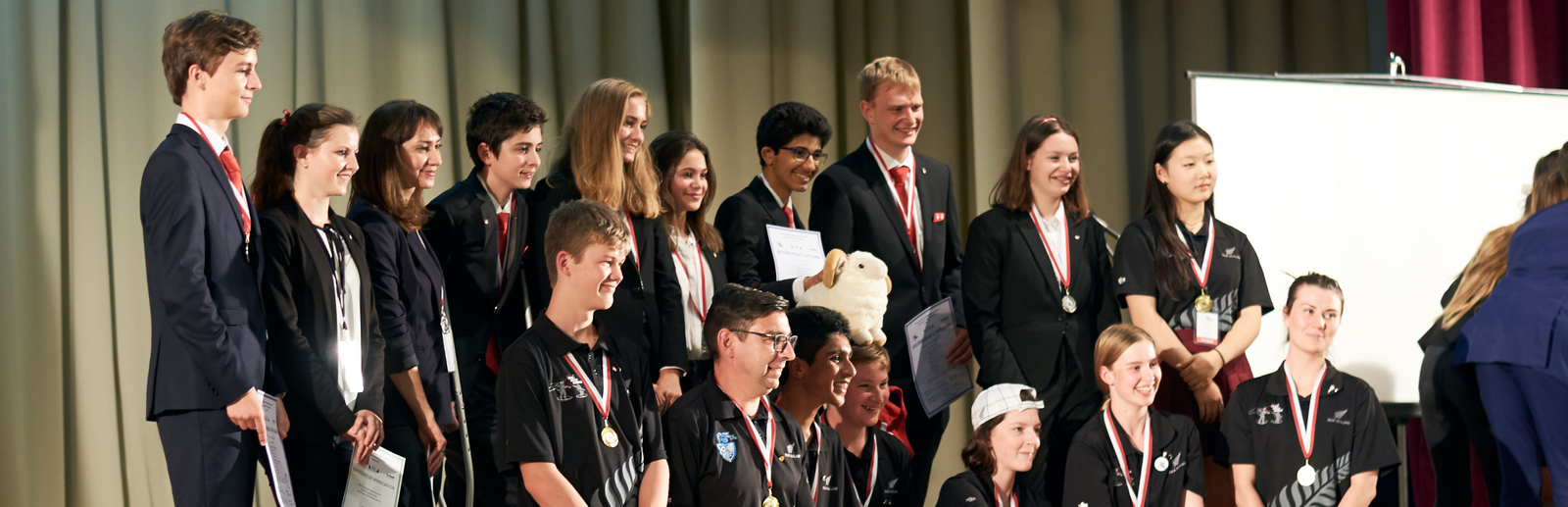
The seventh Swiss Young Physicists Tournament was held on the 18th of March in Zurich. 30 students made the journey to the MNG Rämibühl to present the projects they worked on for the past few months, recieving critique from other students and defending their work. This year was had especially high level Reports and Oppositions, as one can see from how close the results (see below) are. Congratulations to Colorless Enzymes for second place and Breaking Bonds for winning the tournament and to everyone else for doing such a great job with their presentations.
Ranking
Are you preparing for the tournament or thinking about participating but still have some questions about how the tournament works or what you will need to do during those Science Fights? Some commonly asked questions and their answers can be found here. If you can't find the answer you were looking for, feel free to contact us.
This week we managed what we just narrowly missed last year: winning the IYNT trophy!
Preparation for this year’s IYNT started somewhat early, but definitely kicked off fully after the SYNT in March. In the last months, Ester, Lilly, Lohitsai, Lucas, Michael and Samuel worked hard. Investigating the process of making quark, playing tunes on bottles, investigating properties of granular materials and many other interesting problems.
On July 3rd it was finally time to fly to Tbilisi, Georgia, to test, how well prepared we were. This year we were going to meet 15 teams from 9 countries.
Read the official press release (in German).
After weeks of preparation, we departed to China on Wednesday last week. Even though we felt well prepared with many good presentations, we went with mixed expectations, as it was the first time for all of us.
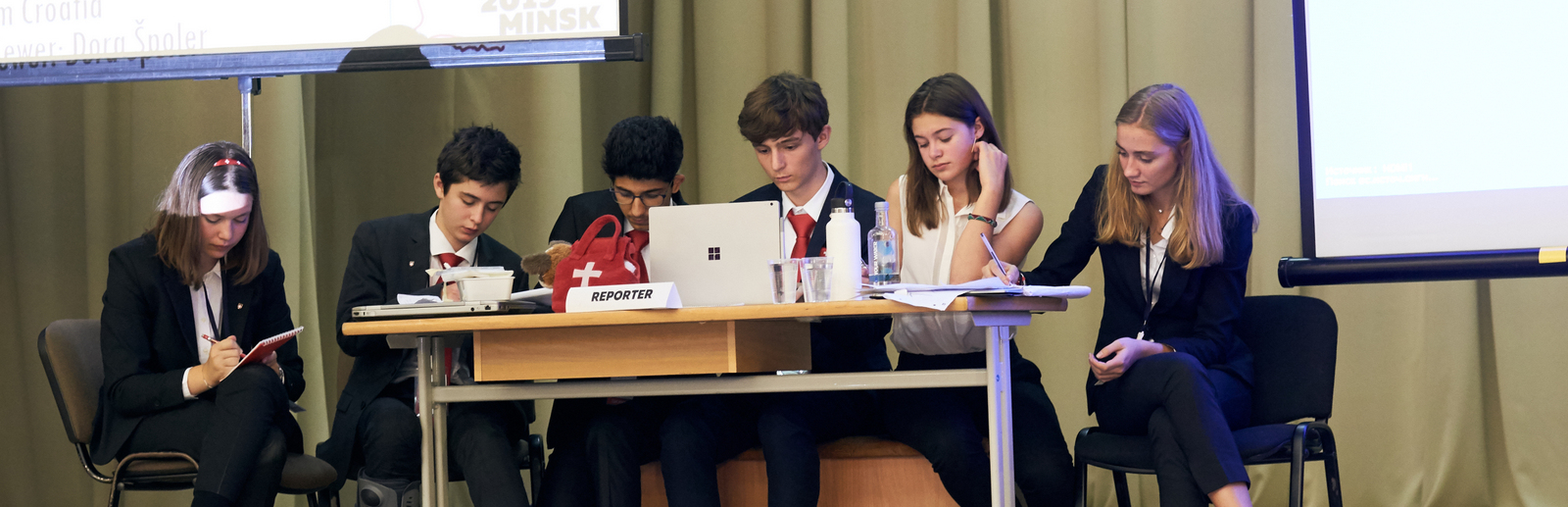
Arriving slightly delayed in Nanjing, the tournament started almost immediately for us with the opening ceremony. There, amongst other things, the 18 teams from 12 countries were asked to introduce themselves and their country in three minutes in an 'artistic' way, wich was graded by a jury. Our humorous slideshow combined with the distribution of some Swiss chocolate was well received and we placed only behind one of the local teams.
Early the next day, the tournament started for real with two science fights for all teams. In the morning, we went up against one of the Chinese teams and team Kazakhstan. Our hopes of starting well into the competition were fulfilled with our team winning the fight handily against the underwhelming Chinese and the even weaker Kazakhstani. Simran's report, Michael's opposition and Nadine's review got us together with the team's help a full 42.5 points, more than the two other teams combined. Only one other team managed to score higher that morning; The home-team "China-NFLS LaplaceWitches".
Round 2 in the afternoon looked like a much tougher fight, as we had to go up against the previous winners from Georgia (who placed 4th in the morning) and another Chinese team. But with a stellar round of 46.0 points we narrowly beat the Georgians and cut the deficit to the leading Chines more than in half.
On the next day an excursion to the Confucius temple was organised. However, in the morning we first visited the mausoleum of Dr. Sun, who has been an important figure in the history of Nanjing. For lunch we got the possibility to witness, that even American fast food chains are not everywhere the same. After another stop at a museum on the history of the region around Nanjing, we finally got to the Confucius temple. Dinner was served in a hotel nearby.
The International Young Naturalists' Tournament (IYNT) is the international counterpart to the SYNT. In contrast to the SYNT, students from all over the world participate. The participants are aged 12 through 16. The age limit is set such that participants of the IYNT must not turn the age of 17 years during the calendar year of the respective IYNT competition.
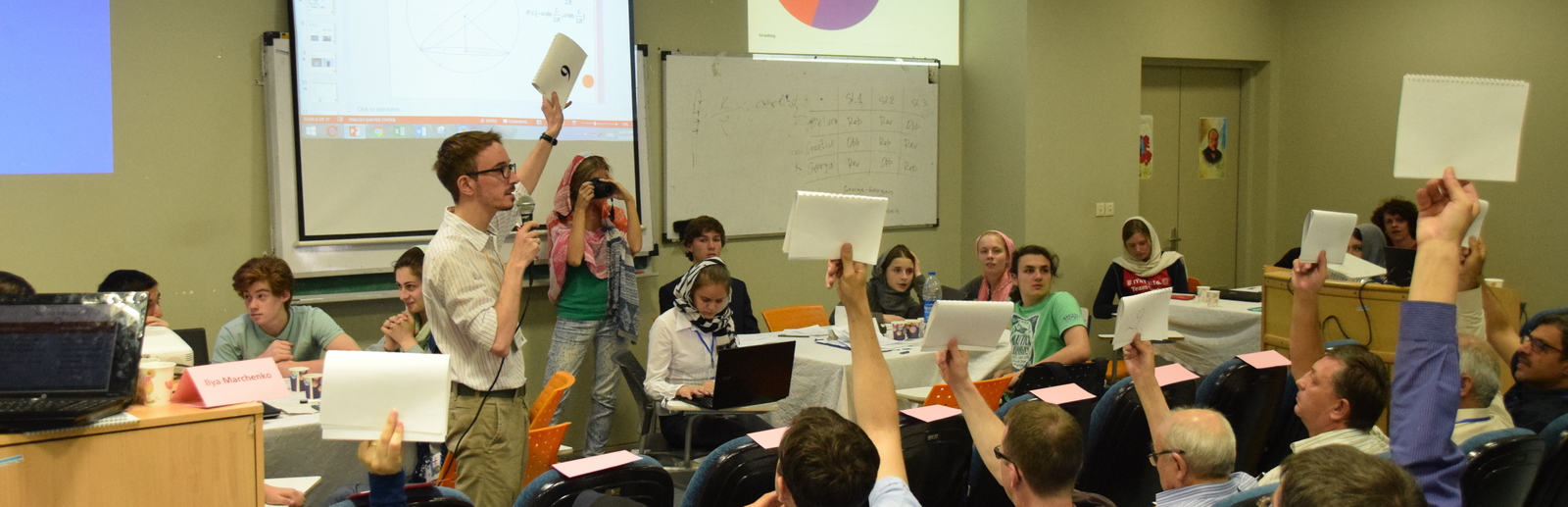
The format is similar to the SYNT: Three teams (each consisting of 6 students) compete against each other in so called Science Fights. They take turns presenting and defending their solution to a given problem, criticizing the solution of the opposing team and reviewing the performance of the two preceding teams. The performance of all three teams is assessed by a jury. The teams have to try to convince both their opponents as well as the jury of the quality of their scientific work and results and of the understanding of physics.
The whole tournament is accompanied by an extensive social program and usually lasts eight days.
More information about the IYNT and the organization behind the IYNT can be found on their website.